

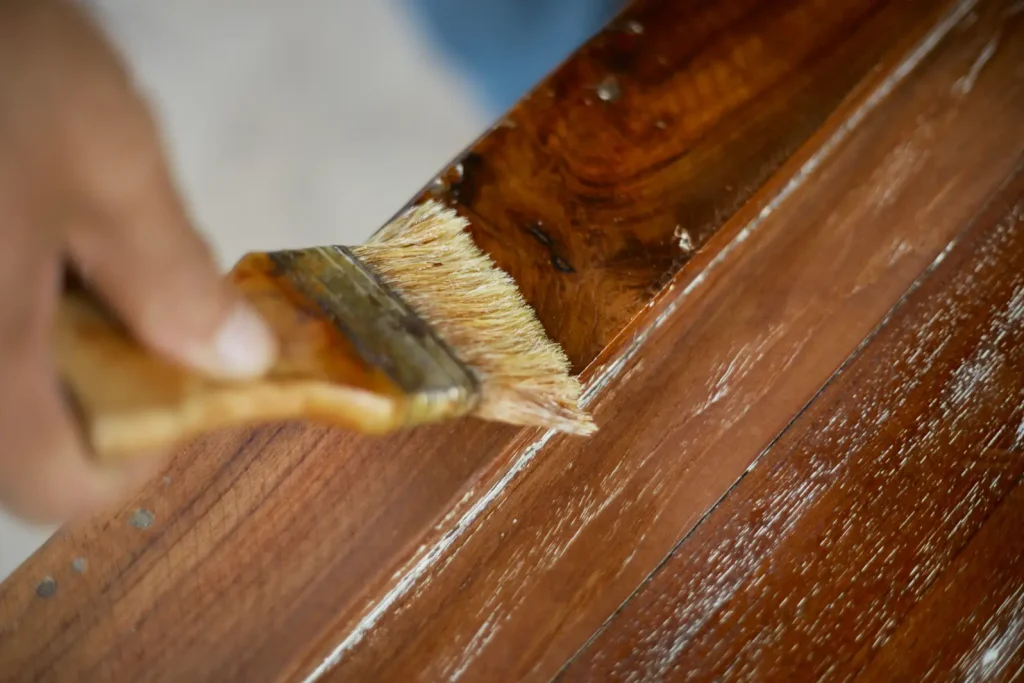
No, you don’t usually need to apply a separate sealer after staining a wood deck. Deck stain does more than add color. It also helps protect the wood from moisture and weather exposure. The level of protection depends on the type of stain, with more heavily pigmented finishes generally providing greater protection from UV exposure.
That doesn’t mean a stained deck can be left without maintenance. Over time, sunlight, rain, foot traffic, and other exposure can wear down the finish. Knowing how to care for the existing stain, and when it needs to be cleaned, recoated, or more extensively prepared, can help keep the deck looking good and the wood protected.
What Happens If You Don’t Seal Wood After Staining?
If the stain is properly selected and applied, the deck remains protected without adding a separate sealer. That protective finish can still wear down over time from sunlight, rain, foot traffic, and other exposure.
When the finish begins to show signs of wear, the next step depends on its condition. A sound finish may only need cleaning and recoating, while a failing finish may need to be removed and the wood prepared before staining again.
Can I Leave Stained Wood Unsealed?
Yes. A properly stained deck doesn’t automatically need another protective product on top of it.
The amount of protection depends on the type of stain. Transparent stains allow more of the natural wood grain to show, while semi-transparent and solid stains provide more color coverage. In general, more heavily pigmented finishes provide greater protection from UV exposure.
Rather than adding another product simply because the deck has been stained, follow the care recommendations for the specific stain and monitor the condition of the finish.
What Not to Do When Staining Wood?
A common mistake is assuming that staining and sealing always need to happen one after the other. They don’t. Applying a separate sealer over an existing stain is not typically part of a standard stained deck maintenance approach.
The application itself also matters. Don’t stain damp wood, skip surface preparation, or apply more product than the wood can properly absorb. It’s also important to pay attention to the weather during application and follow the product manufacturer’s instructions.
What Are Common Staining Mistakes?
Staining damp wood
Moisture in the wood can interfere with how the stain goes on and may lead to an uneven finish.
Skipping preparation
Dirt, mildew, old finishes, and other buildup can keep new stain from absorbing properly. A clean, properly prepared surface gives the new finish a better chance of performing as intended.
Applying too much stain
Wood can only absorb so much product. Excess stain can sit on the surface, leaving a sticky or uneven finish.
Staining in poor weather conditions
Rain, high humidity, extreme heat, and direct sunlight can affect how the stain dries. Always check the manufacturer’s recommended application conditions before starting.
Coating over a failing finish
If the existing stain is peeling or breaking down, applying another coat over it won’t fix the underlying problem. The old finish may need to be removed and the surface prepared before staining again.
How Do You Maintain Stained Wood After Application?
Once your deck has been stained, maintenance is mostly about keeping the existing finish in good condition.
Start by keeping the surface clean and checking for areas where the finish is fading, wearing thin, or starting to fail. If the existing stain is still in good shape, cleaning followed by recoating with the same stain may be all that’s needed.
If the finish is no longer holding up, the deck may need more preparation before it can be stained again. The amount of work depends on the condition of the existing coating and the wood underneath.
Sun exposure, rain, and foot traffic can all affect how quickly a finish wears. Decks that get a lot of sun or heavy use may need attention sooner than covered or lightly used areas.
Does Stain Protect Wood From Water and Sun?
Yes, but the level of protection depends on the type of stain.
Stain helps reduce the amount of moisture the wood takes on, which can help limit the effects of repeated wetting and drying. Pigment also plays an important role in protecting wood from UV exposure. Clear finishes can provide water protection, but they don’t offer the same UV protection as pigmented stains.
The finish you choose should therefore depend on both the appearance you want and the conditions your deck will be exposed to. Learn more about the difference between stain and seal before choosing a finish for your wood deck.
When Should a Stained Deck Be Restained?
There’s no single schedule that works for every deck. How long a finish lasts depends on the type of stain, sun exposure, weather, foot traffic, surface preparation, and how well the deck is maintained.
Instead of re-staining based on a fixed timeline, look at the condition of the finish. Fading, worn areas, or a finish that is no longer performing as expected can all be signs that the deck needs attention.
If the existing stain is still in good condition, cleaning and recoating may be enough. If it’s failing, more extensive preparation may be needed before a new stain can be applied properly.
Protect Your Stained Deck With the Right Maintenance
A good deck stain does more than change the color of the wood. It also helps protect the surface from moisture and, when pigmented, from UV exposure.
Keeping the finish in good condition is what matters most. Regular cleaning and maintenance can help extend the life of a sound finish, while a failing coating may need to be removed and the wood properly prepared before it is stained again.
TrueDecks provides professional deck staining and deck sealing services for homeowners in Gaithersburg, MD, Columbia, MD, and Brambleton, VA who want to protect and maintain their wood decks.