

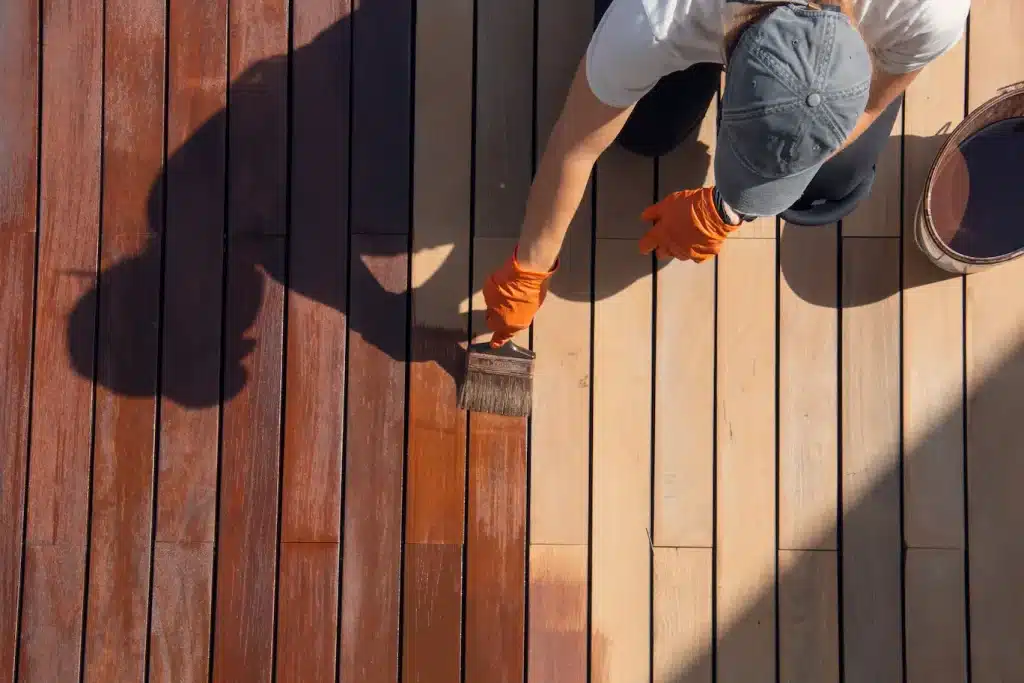
Deck stain protects wood by helping reduce moisture absorption, slowing UV damage, and minimizing the wear that comes with constant exposure to the elements. While it isn’t a permanent solution or a substitute for regular maintenance, applying the right stain can extend the life of your deck and help preserve its appearance over time.
The level of protection depends on the type of stain you choose, how well the deck is prepared before application, and how consistently it’s maintained afterward. Knowing what deck stain protects against, and where its limitations lie, can help you make better decisions about caring for your deck and avoiding premature wood deterioration.
How Deck Stain Protects Wood
Wood is naturally porous, which means it absorbs moisture whenever it’s exposed to rain, humidity, or melting snow. Over time, repeated wetting and drying cycles can cause boards to swell, shrink, crack, split, or warp. Deck stain helps reduce the amount of moisture that penetrates the wood, limiting this cycle and slowing down the damage it causes.
Pigmented deck stains also provide protection against sunlight. UV rays gradually break down wood fibers and fade natural color, leaving the surface looking weathered and gray. Pigmented stains help block some of this ultraviolet exposure, which is why darker or more opaque stains generally provide greater UV protection than clear finishes.
In addition to moisture and sun protection, staining helps preserve the overall appearance of your deck. By slowing weather-related deterioration, stain helps the wood retain a cleaner, more consistent look between maintenance cycles.
What Kind of Protection Does Deck Stain Provide?
Deck stain helps protect wood from moisture and UV damage, but it isn’t designed to prevent every type of deterioration or replace regular maintenance.
Repeated exposure to moisture is one of the biggest causes of wood movement. As deck boards absorb water and dry out, they naturally expand and contract. Over time, this movement can lead to raised grain, surface checks, splitting, and loose fasteners. A properly maintained stain helps slow that cycle by reducing how much moisture the wood absorbs.
If your deck receives full sun for most of the day, a transparent stain may weather more quickly because it contains less pigment to filter UV rays. Semi-transparent and solid stains generally hold up better in these conditions, although they change how much of the natural wood grain remains visible.
Many deck stains are designed to penetrate the wood rather than create the thick surface film associated with traditional paint. This allows the wood to naturally expand and contract with seasonal moisture changes while still benefiting from protection against moisture and UV exposure. Paint can also provide durable protection when used appropriately, but once it begins to crack or peel, restoring the finish typically requires more extensive preparation before recoating.
The right stain depends on factors such as the current condition of the boards, how much sunlight the deck receives, and whether you want to highlight or hide the natural grain.
Is Deck Stain Enough to Protect Your Deck?
Staining is an important part of deck maintenance, but it works best as part of an overall care routine rather than a one-time solution.
Even the highest-quality stain cannot compensate for poor preparation or neglected maintenance. Dirt, mildew, old finishes, and damaged wood can prevent stain from penetrating properly, reducing both its appearance and protective benefits.
Preparing the surface before staining helps ensure the product bonds properly and performs as intended. Preparing a wood deck for staining typically includes removing dirt, mildew, and old finishes that could prevent the stain from penetrating evenly.
Stairs, rail posts, and exposed board ends often require closer attention because these areas experience more moisture exposure and wear than protected deck surfaces.
What Happens If You Don’t Seal Wood After Staining?
Deck stain is itself a protective coating. It adds color while helping reduce moisture absorption, and pigmented stains provide protection against UV exposure. Because the stain provides the protective coating, a separate sealer should not be applied over an existing stain.
If the existing stain is still in good condition, the deck can be cleaned and recoated with the same stain as a maintenance application. This helps refresh the finish and maintain its protective properties without treating sealing as a separate step after staining.
If the existing stain or protective coating is failing, the deck may require restoration rather than another coating applied over the existing finish. Restoration typically involves stripping the old coating, sanding the surface as needed, and applying a new stain to achieve a uniform finish. The appropriate preparation depends on the condition of the existing finish and the wood underneath.
Common Staining Mistakes That Reduce Protection
Even a high-quality stain won’t perform well if it’s applied incorrectly. Some of the most common mistakes that reduce the protective benefits include:
Applying stain to damp wood
Moisture trapped inside the wood can prevent stain from penetrating properly, leading to uneven coverage and reduced durability.
Skipping surface preparation
Professional staining begins with removing contaminants that interfere with absorption, including dirt buildup, mildew, and failing finishes. Without proper preparation, even a quality stain may not perform as expected.
Applying too much stain
Applying more stain than the wood can absorb may leave excess product on the surface, resulting in a tacky finish, uneven appearance, or premature wear.
Staining in unsuitable weather
Extreme heat, direct sunlight, rain, or high humidity can affect how stain dries and bonds with the wood. Following the manufacturer’s recommended application conditions helps achieve better results.
Waiting too long between maintenance cycles
No stain lasts forever. Allowing the protective finish to wear away completely leaves the wood exposed to moisture and UV damage for extended periods.
How Long Does the Protection From Deck Stain Last?
Deck stain does not follow a fixed lifespan. A newly stained deck may need maintenance sooner in high-exposure areas such as south-facing decks, uncovered platforms, and heavily used stairs.
The lifespan of a stained finish depends on:
- The type of stain used
- The amount of direct sunlight the deck receives
- Local weather conditions
- Foot traffic
- The quality of surface preparation
- Ongoing maintenance
South-facing decks, elevated decks with no shade, and areas exposed to constant foot traffic typically show wear sooner than covered or shaded decks. Rather than relying on a calendar alone, monitor how the finish performs in these high-exposure areas.
Keeping up with regular maintenance helps preserve your deck’s appearance and reduces the risk of moisture-related damage that can affect the wood over time.
Protect Your Deck for the Long Term
A quality deck stain improves more than the color of your deck. When properly applied and maintained, it helps reduce moisture intrusion, slow UV damage, and extend the usable life and appearance of properly maintained wood decking.
Knowing what deck stain can and cannot protect against helps homeowners determine when a deck needs routine maintenance, recoating, or more extensive restoration.
TrueDecks provides expert deck staining services in Gaithersburg, MD, Columbia, MD, and Brambleton, VA.